

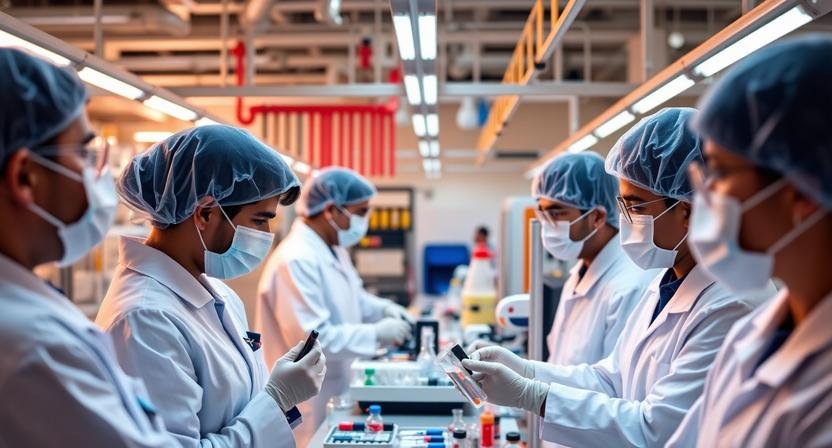
The Indian pharmaceutical industry has long been recognized for its cost-effective generic medicines and bulk drug production. However, in recent years, research and development (R&D) innovation has emerged as a transformative force, reshaping the sector’s global competitiveness, product portfolio, and growth trajectory.
Innovation is no longer limited to process optimization or incremental improvements; it now encompasses complex generics, biosimilars, novel drug delivery systems, and even early-stage novel molecule development. For India, a country traditionally known as the “pharmacy of the world,” R&D innovation represents a shift from being a low-cost manufacturer to a knowledge-driven global player.
This transformation matters because R&D-led innovation drives higher margins, enhances global market access, and strengthens intellectual property portfolios.
Read Also: Pharma Stocks in Focus After Regulatory and Pricing Updates
Overview of the Indian Pharmaceutical R&D Landscape
Current State of R&D in India
The Indian pharmaceutical sector has historically invested less in R&D compared to global counterparts in the US or Europe. However, over the past decade, R&D investment has steadily increased, both in absolute terms and as a percentage of revenue. Companies are expanding research facilities, recruiting scientific talent, and forging partnerships with global research institutions.
Today, Indian R&D spans three major areas: development of generic drugs with complex delivery mechanisms, biosimilars and biologics, and novel drug discovery. Generics still constitute a significant portion of research activity due to regulatory requirements and formulation challenges. Meanwhile, the biosimilar and novel drug segments are emerging as long-term growth engines.
Drivers of R&D Expansion
Several factors are fueling this shift toward innovation: rising global demand for affordable biologics, increasing regulatory compliance expectations, the need for product differentiation, and the ambition to enter high-value international markets. Furthermore, government initiatives such as production-linked incentives (PLI) and funding for biotech research are encouraging companies to invest in new technologies and high-risk drug development.
Impact of R&D Innovation on Generic Medicines
Complex Generics and Differentiation
While traditional generics compete primarily on price, complex generics offer higher value through innovation. These include modified-release formulations, inhalers, injectables, and niche therapeutic applications. By investing in R&D, Indian companies can differentiate their offerings, capture premium pricing, and expand global market share.
For instance, oral dosage forms that require advanced dissolution or bioavailability enhancement, or ophthalmic formulations with improved delivery systems, are increasingly being developed by Indian pharma. Such innovations not only satisfy regulatory standards in stringent markets but also allow companies to build long-term competitive moats.
Regulatory Compliance and Market Access
Innovation in generics is closely tied to regulatory compliance. Developing complex formulations often requires extensive bioequivalence studies, stability testing, and adherence to global Good Manufacturing Practices (GMP). Indian firms investing in R&D can meet these stringent requirements, facilitating smoother entry into regulated markets such as the US, Europe, and Japan.
As a result, companies that integrate R&D into their generic business models enjoy enhanced credibility, faster approvals, and stronger relationships with distributors and healthcare providers.
Biosimilars and Biologics: The Next Frontier
Rising Global Demand
Biosimilars—highly similar versions of approved biologic medicines—represent one of the fastest-growing segments in global healthcare. Biologics are complex, high-cost therapies used for conditions like cancer, autoimmune diseases, and diabetes. By developing biosimilars, Indian companies can provide affordable alternatives to expensive branded biologics, opening up new market opportunities.
Investment in Advanced Manufacturing
Biosimilar development requires sophisticated manufacturing capabilities, including cell line development, fermentation, and purification. Indian companies have responded by upgrading facilities, investing in high-end analytical tools, and hiring specialized talent. These investments not only improve quality and consistency but also strengthen India’s position as a reliable global supplier of biologics.
Strategic Collaborations and Global Reach
Many Indian pharmaceutical firms are partnering with multinational corporations to co-develop biosimilars or conduct joint clinical trials. Such collaborations allow access to international markets, shared technical expertise, and risk-sharing for high-cost development programs. By leveraging global partnerships, Indian firms are accelerating their presence in the multi-billion-dollar biosimilar market.
Novel Drug Discovery: Breaking Traditional Boundaries
Early-Stage Molecule Development
Beyond generics and biosimilars, some Indian pharma companies are now exploring novel drug discovery. This involves identifying new therapeutic targets, conducting preclinical studies, and developing new chemical or biologic entities. While risk and costs are high, the potential rewards include patent-protected products, global market entry, and long-term revenue streams.
Focus Areas in Innovation
Indian pharmaceutical R&D is currently concentrated in oncology, infectious diseases, metabolic disorders, and immunology. Companies are combining traditional medicinal chemistry with advanced technologies such as AI-driven drug design, high-throughput screening, and molecular modeling to accelerate discovery and reduce failure rates.
Challenges and Opportunities
Developing novel drugs presents several challenges, including high costs, stringent regulatory requirements, and long development timelines. However, successful innovation can transform companies into global leaders with sustainable growth. Indian firms that invest strategically in high-potential therapeutic areas and leverage technology-driven platforms are likely to emerge as key players in the next decade.
Digital Transformation in R&D
AI and Data Analytics
Artificial intelligence (AI) and machine learning are increasingly being used in drug discovery, clinical trial design, and process optimization. Indian pharma companies are using AI to predict molecule behavior, optimize formulations, and identify patient populations for targeted therapies. This reduces costs, shortens development timelines, and increases the probability of success.
Digital Clinical Trials
Digital technologies are transforming how clinical trials are conducted. Remote patient monitoring, electronic data capture, and virtual trials are improving efficiency, patient recruitment, and regulatory compliance. Indian R&D teams adopting these technologies are better positioned to compete in global markets and meet stringent regulatory standards.
Economic and Market Implications of R&D Innovation
Enhancing Export Potential
R&D innovation enables Indian pharmaceutical companies to expand their presence in regulated international markets. Complex generics, biosimilars, and novel drugs allow firms to capture higher value segments, increasing revenue and margins. This shift also reduces dependence on commoditized generics, which face intense price competition.
Investment Attraction
Companies demonstrating robust R&D capabilities attract greater investor interest. Strong pipelines, successful regulatory approvals, and innovative portfolios signal growth potential, increasing both domestic and international investment. This investment supports further research, capacity expansion, and strategic partnerships.
Strengthening Intellectual Property
By developing novel formulations, biosimilars, and new molecules, Indian companies strengthen their intellectual property portfolios. Patents protect innovations from direct competition, allowing companies to capture higher revenues and negotiate licensing or collaboration deals.
Challenges to R&D-Led Transformation
High Costs and Long Timelines
Pharmaceutical R&D requires substantial investment, often in the range of hundreds of millions of dollars for new drug development. The long gestation period for novel drugs can strain resources, especially for mid-sized companies.
Talent Shortages
Innovation-driven R&D demands skilled scientists, regulatory experts, and data specialists. Despite a growing talent pool, competition for experienced personnel remains intense, creating operational challenges for some firms.
Regulatory Complexities
Meeting the regulatory standards of multiple international markets requires robust documentation, compliance processes, and quality management. Delays or failures in regulatory approvals can impact timelines and revenue projections.
The Road Ahead: Opportunities for India
Focus on Niche Therapeutic Areas
By targeting high-value therapeutic segments, Indian pharmaceutical companies can differentiate themselves and compete globally. Oncology, rare diseases, and advanced biologics are areas with high demand and fewer competitors.
Public-Private Partnerships
Collaboration between government research institutions and private pharma companies can accelerate innovation, reduce costs, and enhance technology transfer. Policies supporting R&D incentives, tax benefits, and infrastructure development will further strengthen India’s innovation ecosystem.
Integration of Technology and R&D
Continued adoption of AI, data analytics, and digital clinical trial tools will improve efficiency, reduce costs, and enhance success rates in drug development. Companies that integrate technology seamlessly into R&D operations will gain a competitive advantage in both domestic and global markets.
Conclusion
R&D innovation is transforming the Indian pharmaceutical industry from a low-cost generics powerhouse into a globally competitive, knowledge-driven sector. Investments in complex generics, biosimilars, and novel drug discovery are reshaping product portfolios, strengthening intellectual property, and expanding market opportunities.