

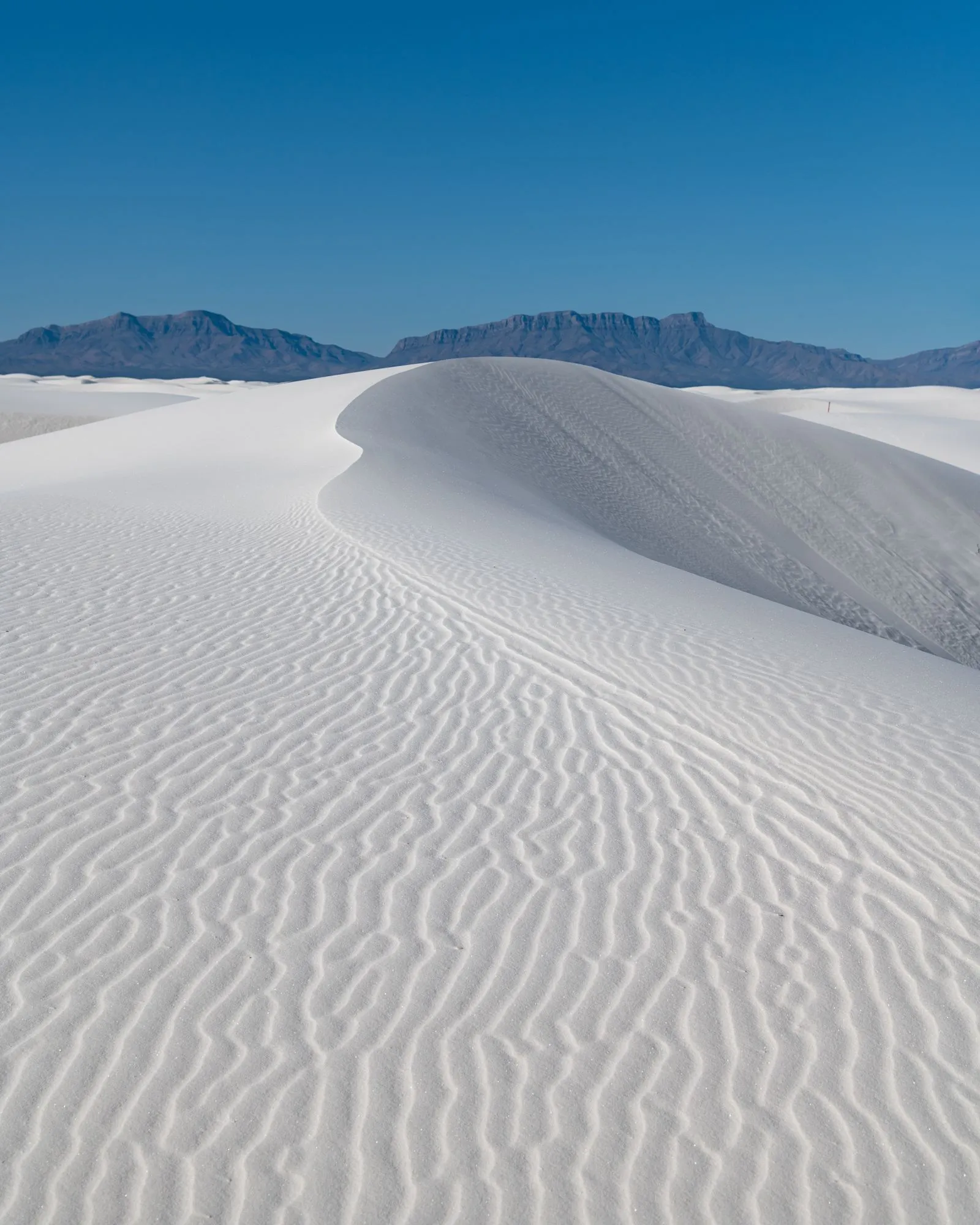
Long before White Sands became famous for its white gypsum dunes, it was a lakeshore where families lived their whole lives. Around Lake Otero, in what is now New Mexico, people hunted, gathered, raised children and moved camp as water and weather shifted. Research discussed in Science Advances shows these communities experienced abrupt environmental change during the Last Glacial Maximum — and the traces they left let us reconstruct something rarer than dates: a daily life.
The most famous traces are footprints, thousands of them, pressed into ancient lakeshore mud and preserved as the lake retreated. Around them, sediments record the comings and goings of water itself. Together they form an unusually human archive of the Ice Age. More science reporting is available on our homepage.
Mornings on the Lakeshore
Daily life began with water and food. Lake Otero drew game — including, at times, giant ground sloths and other now-extinct animals — and people followed. Footprint trails show adults and children walking together, sometimes carrying loads, sometimes moving quickly. The prints of children alongside adults are among the most evocative evidence in North American archaeology: this was not a hunting camp of specialists, but a community on the move, doing ordinary things in an extraordinary landscape.
Gathering mattered as much as hunting. Lakeshores offer reeds, seeds, waterfowl and fish, and Ice Age families would have known the seasonal calendar intimately — which plants were ready, where animals watered, how the mud and wind behaved. Survival at the edge of a glacial world was less about single dramatic hunts than about this accumulated, everyday knowledge, passed between generations on the move.
Moving With a Restless Lake
The lake itself would not sit still. The research highlighted in Science Advances describes abrupt environmental swings during the Last Glacial Maximum: shorelines advancing and retreating, wet phases giving way to dry ones. For families, each swing rearranged the map of food and water. Camps that were well placed one decade might be stranded the next.
Movement was the adaptation. Footprints crossing the ancient playa in many directions suggest people ranged widely and returned often, reading the landscape continuously. Flexibility — in diet, in routes, in camp locations — appears to have been the core survival skill, more valuable than any single technology. It is a pattern archaeologists see in resilient communities worldwide: when the environment will not stabilise, mobility becomes a way of life rather than an emergency measure.
Children in the Footprints
Perhaps the most human detail is who is present. Small footprints, sometimes slipping in the mud, sometimes apparently carried and set down, place young children inside these journeys. Teenagers’ prints appear alongside adults on longer treks. The lakeshore was a workplace, a route and a home all at once, and children grew up inside its rhythms — learning the gathering places and game trails by walking them.
That ordinariness is scientifically precious. Grand narratives of the peopling of the Americas often rest on tools and dates; White Sands offers behaviour. Families walked here, worked here and adapted here, over generations, while the climate lurched around them.
Why Daily Life Matters
Reconstructing daily life is not a soft extra to the science — it is how researchers test whether communities were merely passing through or truly established. The density and variety of the White Sands evidence points to established life: repeated visits, mixed-age groups, knowledge of a changing lake. The National Park Service, which cares for White Sands today, protects a landscape that is simultaneously a natural wonder and one of the richest records of early American life.
Standing on the modern dunes, it is easy to imagine the place empty. The footprints insist otherwise. This was somebody’s home ground — hunted over, gathered from, crossed by children — and its restless lake taught the people who lived beside it the oldest human lesson: adapt, together, and keep moving. More coverage in our news section.
New work at the site increasingly reads like a census of ordinary days: trails made by the same individual recognised across visits, gathering routes worn by repetition, seasonal patterns in who walked where. Each season of fieldwork adds biographies to what began as a geological curiosity. For a public often told that prehistory is unknowable, White Sands is a rebuttal in the most literal medium possible — the ground itself kept the diary, and science has learned to read it. The families who kept that diary, walking a restless lakeshore through the coldest millennia of the Ice Age, left the most eloquent possible testimony: they were here, they lived here, together.
